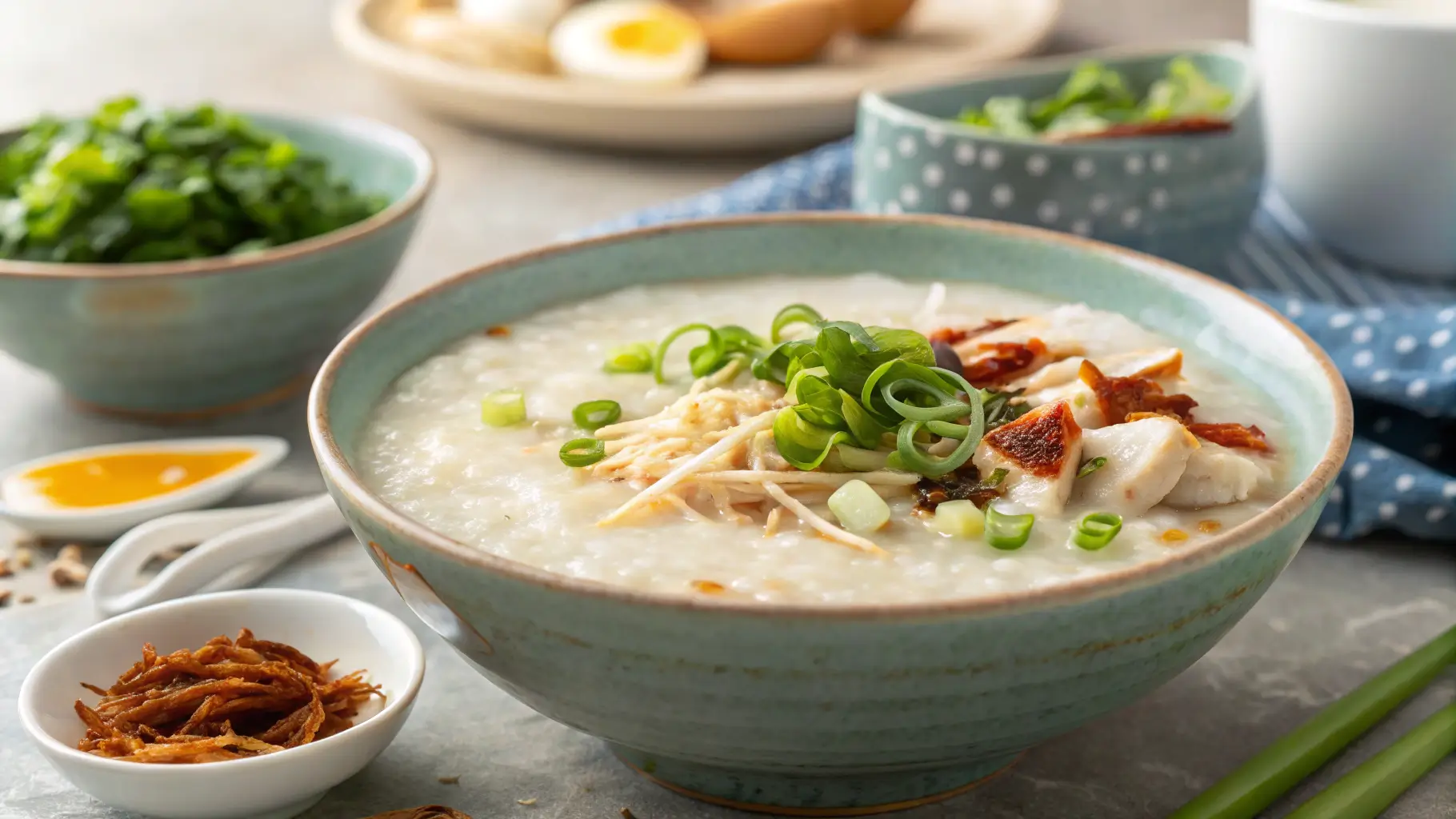
How to Make Congee: Silky Chinese Rice Porridge at Home
There’s something deeply comforting about a bowl of homemade congee. If you’ve been wondering how to make congee that’s creamy, nourishing, and full of flavor, you’re in the right place. This traditional Asian rice porridge transforms simple ingredients into a silky, soul-warming dish that’s perfect for breakfast, lunch, or whenever you need a gentle, satisfying meal.
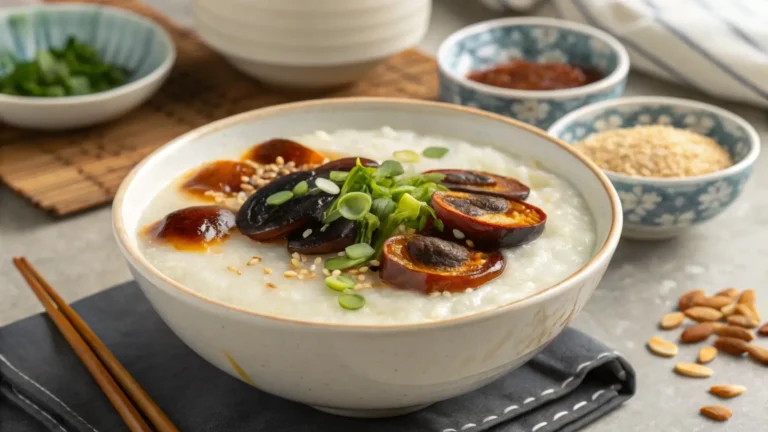
Congee (also called jook, juk, or rice porridge) has a delicate, smooth texture with a mild, slightly sweet rice flavor that serves as the perfect canvas for savory toppings. The aroma of simmering rice fills your kitchen with warmth and promise. Whether you’re feeling under the weather, craving comfort food, or simply want to explore authentic Chinese cooking, this versatile porridge has been a staple across Asia for centuries—and for good reason.
Why You’ll Love This Congee Recipe
- Incredibly simple – Just rice, water, and time create magic in one pot
- Endlessly customizable – Top with anything from century eggs to fresh ginger and scallions
- Gentle and nourishing – Easy to digest, making it ideal for all ages and when you’re feeling unwell
- Budget-friendly – Uses pantry staples to feed a crowd
- Make-ahead friendly – Reheats beautifully and tastes even better the next day
Ingredients
For Basic Congee:
- 1 cup jasmine rice (or any white rice)
- 8-10 cups water or chicken broth (adjust for desired thickness)
- 1-inch piece fresh ginger, sliced (optional but recommended)
- 1 teaspoon salt (or to taste)
- 1 tablespoon neutral oil (helps create silky texture)
Popular Toppings (Choose Your Favorites):
- Shredded chicken, pork, or cooked shrimp
- Century egg or soft-boiled egg
- Green onions, thinly sliced
- Fresh cilantro
- Crispy fried shallots or garlic
- Soy sauce or sesame oil
- White pepper
- Pickled vegetables
- Roasted peanuts
- Chili oil or chili crisp
Substitutions: Use brown rice for a nuttier flavor (cooking time will increase), or try jasmine rice for the most traditional texture. Vegetable broth works perfectly for a vegetarian version.
How to Make Congee
Step 1: Rinse the Rice
Rinse 1 cup of rice under cold water 2-3 times until the water runs mostly clear. This removes excess starch. Drain well. For an even creamier congee, you can soak the rice for 30 minutes, then drain before cooking.
Step 2: Prepare Your Pot
In a large heavy-bottomed pot or Dutch oven, combine the rinsed rice with 8 cups of water (or chicken broth for richer flavor). Add the sliced ginger and 1 tablespoon of neutral oil. The oil helps break down the rice grains for that signature silky texture.
Step 3: Bring to a Boil
Place the pot over high heat and bring to a rolling boil, stirring occasionally to prevent the rice from sticking to the bottom. This initial boil is crucial for getting the cooking process started properly.
Step 4: Reduce and Simmer
Once boiling, reduce the heat to low and partially cover the pot (leave it slightly ajar to prevent overflow). Simmer for 60-90 minutes, stirring every 15-20 minutes. The congee is ready when the rice has completely broken down and the mixture is creamy and porridge-like. If it becomes too thick, add more water or broth until you reach your preferred consistency.
Pro tip: The longer you cook congee, the silkier it becomes. Some prefer it after 1 hour, while others love it after 2 hours for maximum creaminess.
Step 5: Season and Serve
Remove the ginger slices and season the congee with salt to taste. Start with 1 teaspoon and adjust based on preference and whether you used salted broth. Ladle the hot congee into bowls and let everyone customize with their favorite toppings.
Recipe Tips & Variations
For Extra Creamy Congee: After rinsing, freeze the rice for at least 2 hours or overnight, then cook directly from frozen. The ice crystals break down the rice grains even further, creating an ultra-silky texture.
Savory Variations:
- Chicken Congee: Add boneless chicken thighs in the last 30 minutes of cooking, then shred and return to the pot
- Pork Congee: Stir in ground pork seasoned with soy sauce and ginger
- Seafood Congee: Add shrimp, scallops, or fish in the final 5-10 minutes
Flavor Boosters:
- Use half water and half chicken or pork bone broth
- Add dried scallops or shiitake mushrooms while cooking for umami depth
- Stir in a spoonful of chicken bouillon or Better Than Bouillon
Time-Saving Method: Use a rice cooker’s porridge setting (about 2 hours) or an Instant Pot (30 minutes on high pressure with natural release).
Dietary Swaps:
- Gluten-free: Naturally gluten-free when using gluten-free broth and toppings
- Lower sodium: Use unsalted broth and control salt at serving time
Serving Suggestions
Congee is traditionally served hot in individual bowls with a selection of toppings arranged on the table, allowing each person to customize their bowl. Here are some authentic serving ideas:
- For Breakfast: Top with century egg, pickled radish, and crispy youtiao (Chinese crullers) for dipping
- For a Light Meal: Add shredded chicken, ginger, scallions, and a drizzle of sesame oil
- When Feeling Unwell: Keep it simple with just ginger, white pepper, and a soft-boiled egg
- For Entertaining: Create a congee bar with 8-10 different toppings and let guests build their own bowls
Pair with Chinese tea (jasmine or oolong) or warm soy milk for an authentic experience.
Storage & Freezing Instructions
Refrigerator: Store plain congee (without toppings) in an airtight container for up to 5 days. It will thicken considerably as it cools—this is normal.
Reheating: Add 1/4 to 1/2 cup of water or broth per serving and reheat on the stovetop over medium-low heat, stirring frequently until hot and creamy again. You can also microwave in 1-minute intervals, stirring between each.
Freezing: Congee freezes well for up to 3 months. Portion into freezer-safe containers, leaving space at the top for expansion. Thaw overnight in the refrigerator, then reheat as directed above, adding extra liquid to restore the creamy consistency.
Pro tip: Freeze toppings separately and add only when serving fresh for the best texture and flavor.
Nutrition Information (Per Serving, Plain Congee)
- Calories: Approximately 120-150 per cup
- Carbohydrates: 25-30g
- Protein: 2-3g (more if made with broth or protein toppings)
- Fat: 2g
Note: Nutrition varies based on toppings and whether you use water or broth.
Conclusion
Now that you know how to make congee, you have a versatile, comforting dish in your cooking repertoire that works for any time of day. This Chinese rice porridge is more than just a recipe—it’s a warm hug in a bowl, a blank canvas for your culinary creativity, and a connection to centuries of Asian food tradition. The beauty of congee lies in its simplicity and adaptability, welcoming whatever ingredients you have on hand.
I’d love to hear how your congee turns out! What are your favorite toppings? Do you prefer yours thick and creamy or a bit thinner? Leave a comment below with your experience, share a photo, or ask any questions. Happy cooking!
Frequently Asked Questions (FAQs)
Can I use different types of rice for congee?
Yes! While jasmine or medium-grain white rice is traditional, you can use other varieties. Short-grain rice creates thicker, stickier congee, while long-grain rice stays slightly more separated. Brown rice works but requires 30-45 minutes additional cooking time. Avoid instant or parboiled rice, as they won’t break down properly to create the signature creamy texture.
Can I make congee ahead of time?
Absolutely! Congee is perfect for meal prep. Make a large batch and store plain congee in the refrigerator for up to 5 days. It actually deepens in flavor overnight. Keep toppings separate and add them fresh when reheating. This makes congee an excellent make-ahead breakfast or easy weeknight dinner option—just reheat individual portions as needed.
How do I know when my congee is done cooking?
Congee is done when the rice grains have completely broken down and the mixture looks creamy and porridge-like rather than like separate grains in water. The texture should be smooth and thick enough to coat the back of a spoon. If you lift your spoon, the congee should slowly drip off rather than running off quickly. This typically takes 60-90 minutes of simmering, though you can cook it longer for an even silkier consistency.
Can I make congee without a stovetop?
Yes! You have several options. An Instant Pot or pressure cooker works wonderfully: use a 1:8 rice-to-liquid ratio and cook on high pressure for 30 minutes with natural release. A rice cooker with a porridge setting takes about 2 hours but is completely hands-off. You can even make congee in a slow cooker: combine ingredients and cook on low for 6-8 hours or high for 3-4 hours, stirring occasionally.
Why is my congee too thick/thin or not creamy?
Too thick? Simply add more water or broth, 1/4 cup at a time, and stir until you reach your desired consistency. Congee thickens as it cools and overnight, so always err on the side of slightly thinner than you want. Too thin? Continue simmering uncovered to evaporate excess liquid, or mash some of the rice against the side of the pot to release more starch. Not creamy? You may need to cook longer (aim for 90 minutes minimum) or stir more frequently to break down the rice grains.
Can I reduce the water-to-rice ratio?
Yes, but it changes the texture. The traditional 1:8 to 1:10 ratio (rice to liquid) creates classic, very creamy congee. For a thicker congee, use 1:6 or 1:7 ratio. For a thinner, more soup-like consistency, use up to 1:12. Start with less liquid and add more while cooking—it’s easier to thin congee than to thicken it. The ratio also depends on your rice type and how long you cook it, so feel free to adjust based on your preference.