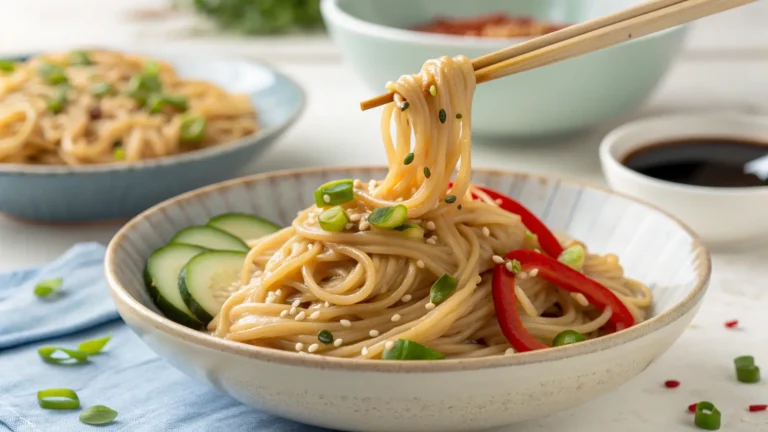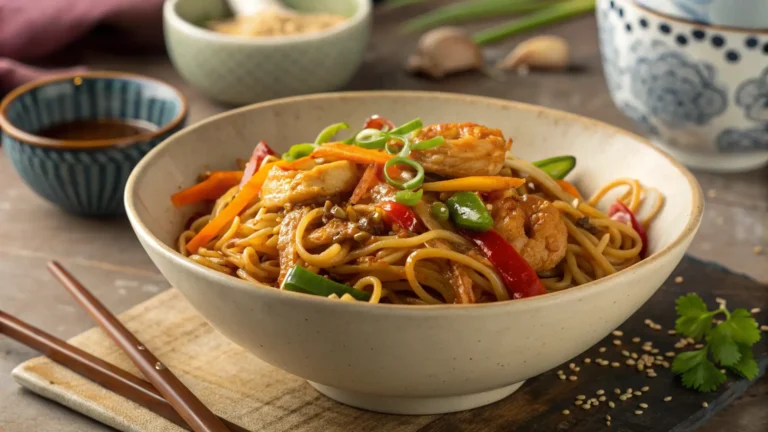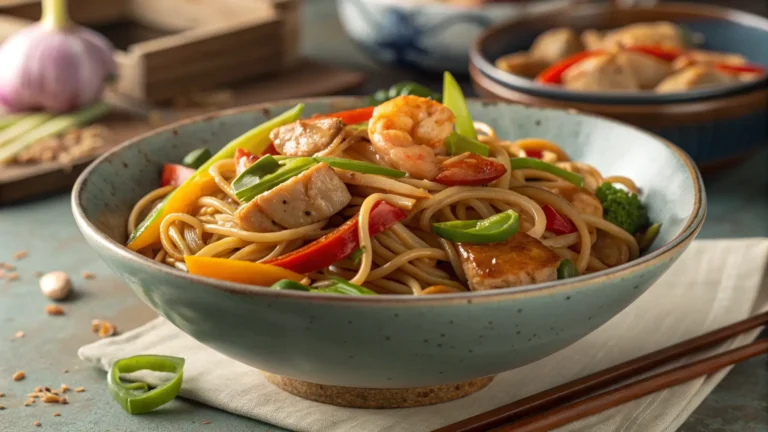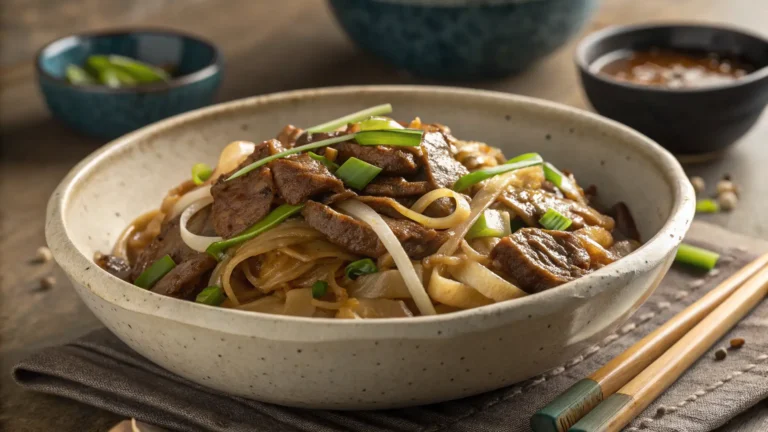
Dan Dan Noodles – Bold, Spicy, and Irresistibly Savory
There’s something utterly addictive about a steaming bowl of dan dan noodles. This iconic Sichuan street food combines bouncy wheat noodles with a bold, nutty sauce that’s equal parts spicy, savory, and slightly sweet. The rich sesame paste, fiery chili oil, and aromatic Sichuan peppercorns create layers of flavor that’ll have you coming back for more. Whether you’re craving authentic Chinese dan dan noodles for a quick weeknight dinner or want to impress guests with restaurant-quality noodles at home, this recipe delivers every time.
Traditionally sold by street vendors who carried their cooking equipment on bamboo poles (dan dan in Chinese), these noodles have evolved from humble street snack to beloved comfort food enjoyed worldwide. The sauce is the star here—deeply savory from soy sauce and sesame paste, with just enough heat to make your lips tingle and enough complexity to keep every bite interesting.
Why You’ll Love This Dan Dan Noodles Recipe
- Ready in 20 minutes – Faster than takeout and infinitely more flavorful
- Customizable heat level – Adjust the chili oil to suit your spice tolerance
- Deeply savory and complex – The combination of sesame, soy, and aromatics creates restaurant-quality depth
- Make-ahead friendly – The sauce keeps beautifully for several days
- Authentic flavor at home – No need to search for a Sichuan restaurant when you can make homemade dan dan noodles anytime
Ingredients
For the Sauce:
- 3 tablespoons Chinese sesame paste (or tahini as substitute)
- 3 tablespoons soy sauce
- 2 tablespoons Chinese black vinegar (or rice vinegar)
- 1 tablespoon chili oil (plus more for serving)
- 1 tablespoon sesame oil
- 2 teaspoons sugar
- 2 cloves garlic, minced
- 1 teaspoon Sichuan peppercorns, toasted and ground (optional but recommended)
- ¼ cup chicken or vegetable broth
- 2 tablespoons preserved mustard greens (ya cai), chopped (optional but traditional)
For the Noodles:
- 12 oz fresh or dried Chinese wheat noodles (or ramen noodles)
- 6 oz ground pork (or ground chicken, turkey, or plant-based alternative)
- 2 teaspoons neutral oil (vegetable or canola)
- 2 green onions, finely chopped
- 1 tablespoon Shaoxing wine (or dry sherry)
For Garnish:
- Chopped peanuts or cashews
- Additional sliced green onions
- Fresh cilantro (optional)
- Extra chili oil
How to Make Dan Dan Noodles
Step 1: Prepare the Sauce
In a medium bowl, whisk together the sesame paste, soy sauce, black vinegar, chili oil, sesame oil, and sugar until smooth. The sesame paste may be thick, so add the broth gradually while whisking to create a pourable consistency. Stir in the minced garlic, ground Sichuan peppercorns, and preserved mustard greens if using. Set aside. This dan dan noodle sauce is the foundation of authentic flavor.
Step 2: Cook the Ground Pork
Heat a wok or large skillet over medium-high heat. Add the neutral oil and ground pork, breaking it up with a spatula. Cook for 4-5 minutes until browned and crispy at the edges. Add the Shaoxing wine and half of the chopped green onions. Stir-fry for another minute until fragrant. Remove from heat and set aside.
Step 3: Boil the Noodles
Bring a large pot of water to a rolling boil. Add the noodles and cook according to package directions, usually 3-4 minutes for fresh noodles or 5-6 minutes for dried. You want them al dente with a slight chew. Reserve ½ cup of the noodle cooking water before draining.
Step 4: Assemble the Dan Dan Noodles
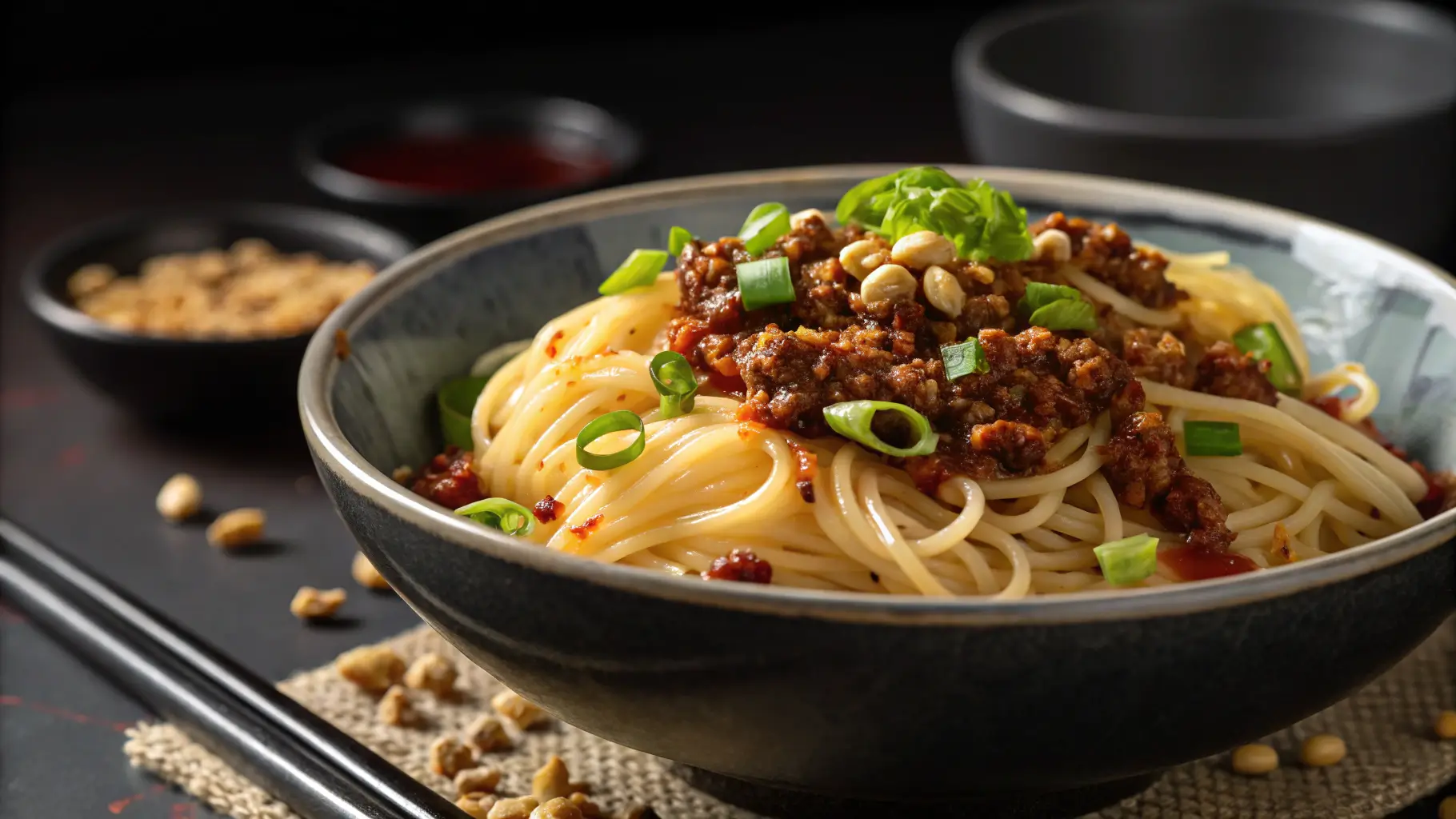
Divide the prepared sauce among serving bowls (this recipe serves 3-4). Add 2-3 tablespoons of the reserved noodle water to each bowl to loosen the sauce. Add the cooked noodles and toss to coat thoroughly. Top with the cooked ground pork, chopped peanuts, remaining green onions, and a drizzle of extra chili oil.
Step 5: Serve Immediately
Toss everything together at the table for the full experience. The heat from the noodles will warm the sauce, and the noodle water helps everything emulsify into a silky, clingy coating.
Recipe Tips & Variations
Find the Right Sesame Paste: Chinese sesame paste is made from toasted sesame seeds and has a deeper, more robust flavor than Middle Eastern tahini. Look for it in Asian grocery stores (brands like Koon Chun are excellent). If using tahini, toast it lightly in a dry pan first to deepen the flavor.
Adjust the Heat: Start with 1 tablespoon of chili oil and add more to taste. For mild dan dan noodles, use ½ tablespoon. For those who love heat, go up to 2 tablespoons or add fresh chopped chilies.
Make It Vegetarian: Skip the pork and use crumbled firm tofu, chopped shiitake mushrooms, or plant-based ground meat. Add a splash of mushroom soy sauce for extra umami.
Noodle Substitutions: Can’t find Chinese wheat noodles? Use fresh ramen, udon, soba, or even spaghetti in a pinch. The sauce is forgiving and delicious with any noodle shape.
Add Vegetables: Toss in blanched bok choy, spinach, or bean sprouts for extra nutrition and texture.
Sichuan Peppercorns: These create the signature numbing sensation (ma la) that makes Sichuan cuisine distinctive. Toast them in a dry pan until fragrant, then grind in a spice grinder or mortar and pestle. If unavailable, the noodles will still be delicious without them.
Serving Suggestions
Dan dan noodles are traditionally served in individual bowls as a complete meal. They’re perfect for:
- Quick weeknight dinners when you’re craving something satisfying and flavorful
- Casual dinner parties – set up a noodle bar with various toppings and let guests customize
- Meal prep lunches – pack the sauce and noodles separately and combine when ready to eat
- Late-night comfort food when you need something warming and substantial
Pair with simple cucumber salad dressed with rice vinegar and sesame oil, or serve alongside potstickers and tea for a full Sichuan-inspired feast.
Storage & Freezing Instructions
Sauce Storage: The dan dan sauce can be made up to 5 days in advance and stored in an airtight container in the refrigerator. This actually helps the flavors meld together. Bring to room temperature or warm gently before using.
Cooked Pork: Store the cooked ground pork separately in the refrigerator for up to 4 days. Reheat in a skillet before serving.
Assembled Noodles: These are best enjoyed fresh, as the noodles can become soggy when stored. If you must store leftovers, keep the noodles and sauce separate and combine when reheating. Store in the refrigerator for up to 2 days.
Freezing: The sauce freezes well for up to 3 months. Freeze in portion-sized containers for easy future meals. The cooked pork also freezes well. Thaw overnight in the refrigerator before using. Fresh noodles should always be cooked fresh rather than frozen.
Nutrition Information
Per serving (serves 4):
Approximately 450-500 calories | 18g protein | 52g carbohydrates | 20g fat | 3g fiber
Note: Nutrition varies based on noodle type and portion size. Using lean ground meat and reducing oil can lower the calorie count.
Conclusion
Now you know how to make authentic dan dan noodles right in your own kitchen! This recipe brings the bold, complex flavors of Sichuan street food to your table in just 20 minutes. The rich, nutty sauce paired with tender noodles and savory pork creates a bowl of pure comfort that rivals any restaurant version.
Don’t be intimidated by the ingredient list—once you stock your pantry with a few Asian staples, these spicy dan dan noodles will become a regular rotation in your meal plan. The beauty is in the balance: nutty sesame, tangy vinegar, fiery chili, and that distinctive Sichuan peppercorn tingle.
Give this recipe a try and let me know how it turns out! Did you adjust the spice level? Add any creative toppings? Leave a comment below—I’d love to hear about your dan dan noodles experience. And if you loved this recipe, please share it with fellow noodle lovers!
Frequently Asked Questions (FAQs)
Can I make dan dan noodles without sesame paste?
While sesame paste is traditional and provides the signature nutty flavor, you can substitute with tahini mixed with a teaspoon of toasted sesame oil. Peanut butter (preferably natural, unsweetened) also works in a pinch, though it changes the flavor profile slightly. The sauce won’t be completely authentic, but it will still be delicious.
How spicy are dan dan noodles?
The spice level is completely customizable. Traditional Sichuan dan dan noodles are quite spicy, but you control the heat through the amount of chili oil you use. Start with less and add more at the table. The Sichuan peppercorns add a numbing sensation rather than heat, which is optional.
Can I use different types of noodles?
Absolutely! While fresh Chinese wheat noodles are ideal, dried wheat noodles, ramen, udon, or even spaghetti work well. The key is choosing a noodle with enough body to hold up to the thick, flavorful sauce. Avoid delicate rice noodles or angel hair pasta as they’re too fragile.
Can I make this recipe ahead of time?
Yes! The sauce can be made 3-5 days in advance and stored in the refrigerator, which actually improves the flavor as everything melds together. The ground pork can also be cooked ahead and refrigerated for up to 4 days. Only cook the noodles fresh when you’re ready to serve for the best texture.
What’s the difference between dan dan noodles and other Chinese noodle dishes?
Dan dan noodles are distinguished by their specific sauce combination—sesame paste, chili oil, Sichuan peppercorns, and black vinegar—along with ground pork topping. This creates a unique flavor profile that’s nutty, spicy, slightly tangy, and has that distinctive numbing sensation. Other noodle dishes use different sauce bases and ingredients.
Can I make this vegetarian or vegan?
Definitely! Replace the ground pork with crumbled firm tofu, chopped mushrooms, or plant-based ground meat. Use vegetable broth instead of chicken broth. Make sure your chili oil and other condiments don’t contain animal products. The result is just as satisfying and flavorful as the traditional version.