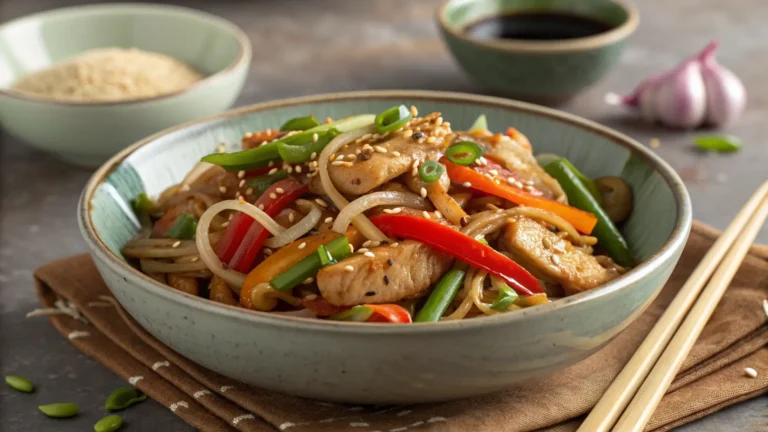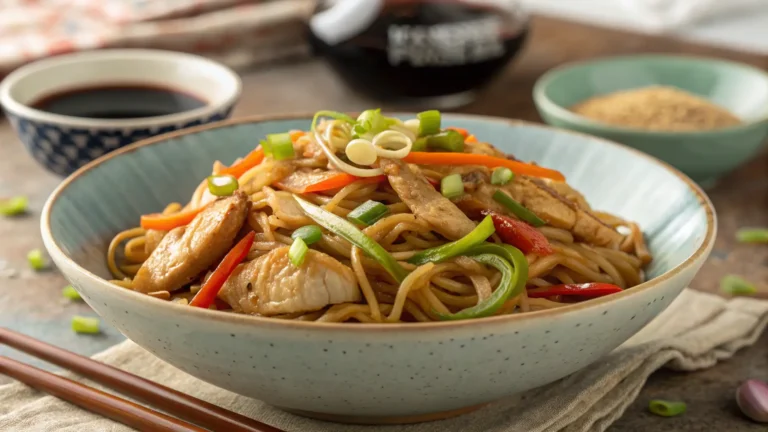
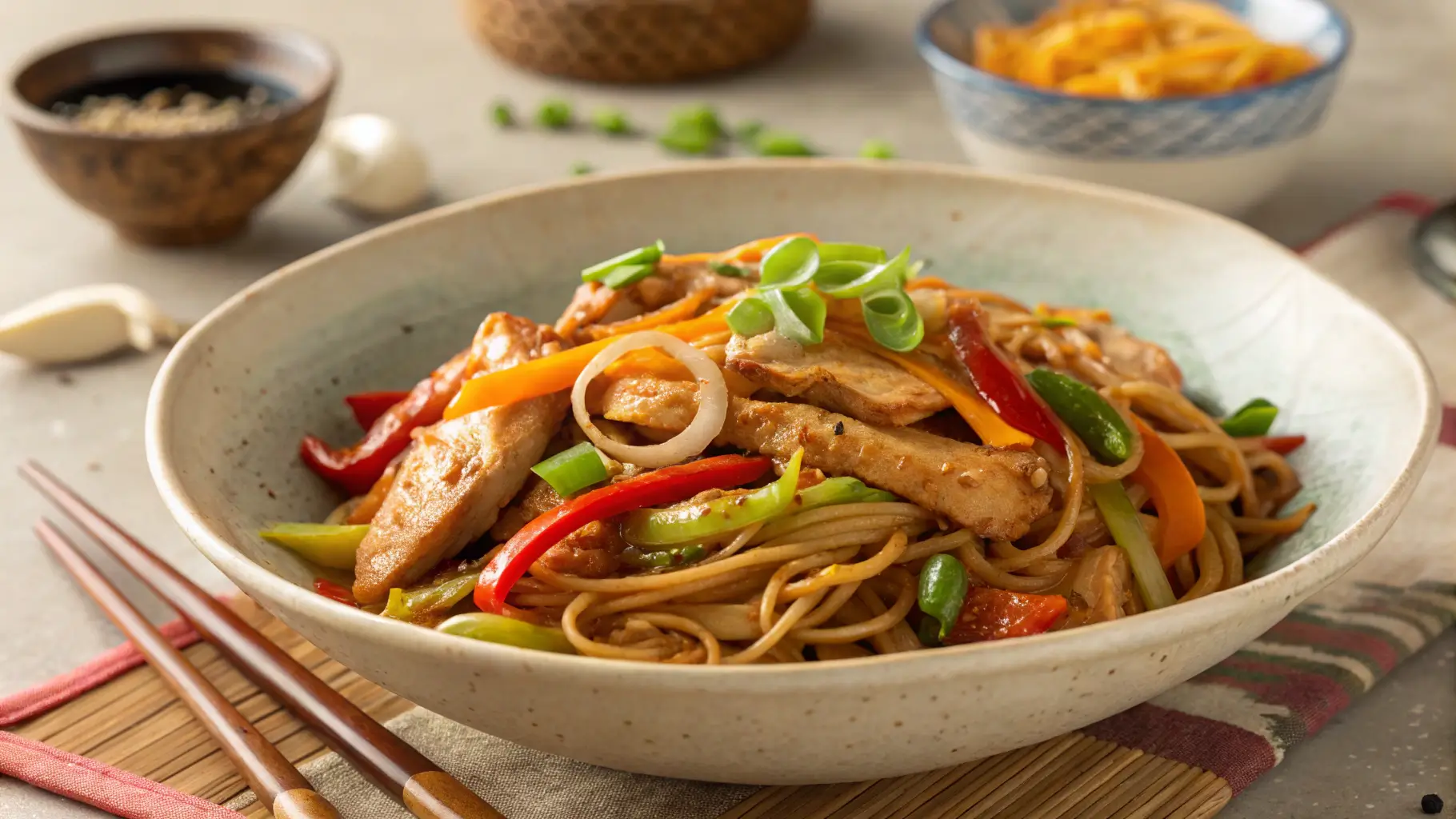
Chicken Lo Mein – Better Than Takeout & Ready in 20 Minutes
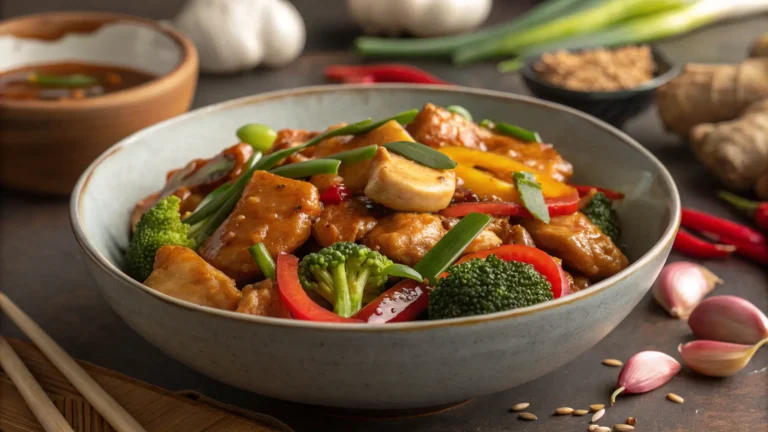
There’s something incredibly satisfying about twirling a forkful of silky noodles coated in savory sauce, packed with tender chicken and crisp vegetables. Chicken lo mein is one of those beloved Chinese-American dishes that delivers restaurant-quality flavor right in your own kitchen and it’s surprisingly easy to make. This homemade chicken lo mein recipe features perfectly seasoned chicken breast, fresh vegetables, and chewy lo mein noodles all tossed together in a deliciously balanced sauce. Whether you’re craving a quick weeknight dinner or looking to impress guests with your takeout skills, this authentic-tasting dish comes together in just 20 minutes and tastes better than any delivery option.
Lo mein, which literally means “stirred noodles” in Cantonese, is a staple of Chinese cuisine that’s been adapted and loved across America. Unlike crispy chow mein, lo mein noodles are soft, chewy, and coated in sauce rather than fried making them the perfect vehicle for soaking up all those incredible flavors.
Why You’ll Love This Chicken Lo Mein Recipe
- Faster than delivery – Ready in 20 minutes from start to finish, making it perfect for busy weeknights
- Budget-friendly – Costs a fraction of takeout and feeds the whole family
- Customizable – Easily swap vegetables or adjust the sauce to your taste preferences
- Meal prep champion – Makes great leftovers and reheats beautifully for quick lunches
- Authentic flavor – Restaurant-quality taste without any mystery ingredients or MSG
Ingredients
For the Sauce:
- 3 tablespoons soy sauce (or tamari for gluten-free)
- 2 tablespoons oyster sauce
- 1 tablespoon sesame oil
- 1 tablespoon rice vinegar
- 1 tablespoon brown sugar
- 2 teaspoons cornstarch
- 1/4 cup chicken broth or water
- 1/2 teaspoon fresh grated ginger
- 2 cloves garlic, minced
For the Lo Mein:
- 8 ounces lo mein noodles (or substitute spaghetti, linguine, or yakisoba noodles)
- 1 pound boneless, skinless chicken breast, thinly sliced
- 3 tablespoons vegetable oil, divided
- 1 medium onion, thinly sliced
- 2 cups shredded cabbage or napa cabbage
- 1 large carrot, julienned or thinly sliced
- 1 red bell pepper, thinly sliced
- 4 ounces snap peas or snow peas
- 3 green onions, cut into 2-inch pieces
- Salt and pepper to taste
- Sesame seeds for garnish (optional)
How to Make Chicken Lo Mein
Step 1: Prepare the Sauce
In a small bowl, whisk together soy sauce, oyster sauce, sesame oil, rice vinegar, brown sugar, cornstarch, chicken broth, grated ginger, and minced garlic until the cornstarch is fully dissolved. Set aside. This sauce is the flavor foundation of your chicken lo mein, so make sure everything is well combined.
Step 2: Cook the Noodles
Bring a large pot of water to boil and cook the lo mein noodles according to package directions, typically 3-4 minutes for fresh noodles or 6-8 minutes for dried. You want them al dente since they’ll cook a bit more when tossed with the sauce. Drain and rinse briefly with cold water to stop the cooking process and prevent sticking. Toss with a tiny bit of oil and set aside.
Step 3: Cook the Chicken
Season the sliced chicken with a pinch of salt and pepper. Heat 1 tablespoon of vegetable oil in a large wok or skillet over high heat until shimmering. Add the chicken in a single layer and cook for 3-4 minutes without stirring to get a nice sear, then flip and cook another 2-3 minutes until golden and cooked through. Remove chicken to a plate and set aside.
Step 4: Stir-Fry the Vegetables
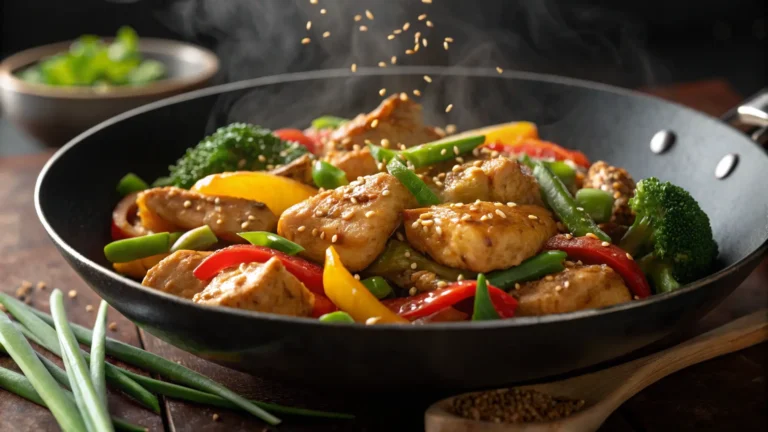
Add another tablespoon of oil to the same wok. Toss in the sliced onion and cook for 1 minute until fragrant. Add the cabbage, carrot, bell pepper, and snap peas. Stir-fry for 3-4 minutes over high heat, keeping the vegetables moving constantly. They should be tender-crisp, not mushy you want that perfect stir-fry texture with a slight char on some pieces.
Step 5: Combine Everything
Reduce heat to medium. Return the cooked chicken to the wok along with the cooked noodles and green onions. Give the sauce mixture one final stir (the cornstarch settles), then pour it over the noodles. Toss everything together vigorously for 2-3 minutes until the noodles are evenly coated, the sauce has thickened slightly, and everything is heated through. If the sauce seems too thick, add a splash of chicken broth or water.
Step 6: Serve
Transfer your homemade chicken lo mein to serving plates or bowls. Garnish with sesame seeds and extra sliced green onions if desired. Serve immediately while hot for the best texture and flavor.
Recipe Tips & Variations
Protein Swaps: Substitute the chicken with beef (flank steak or sirloin), shrimp, pork, tofu, or make it vegetarian with extra vegetables and mushrooms.
Vegetable Variations: Feel free to use whatever vegetables you have on hand broccoli florets, baby corn, mushrooms, bok choy, bean sprouts, or zucchini all work beautifully in this lo mein recipe.
Noodle Substitutes: Can’t find lo mein noodles? Use fresh or dried Chinese egg noodles, yakisoba noodles, udon, or even regular spaghetti or linguine in a pinch. Just adjust cooking time accordingly.
Spice It Up: Add 1/2 teaspoon of red pepper flakes or a drizzle of sriracha or chili oil for a spicy chicken lo mein version.
Gluten-Free Option: Use tamari instead of soy sauce, gluten-free oyster sauce, and rice noodles or gluten-free pasta to make this dish completely gluten-free.
Extra Umami: Add a tablespoon of hoisin sauce to the sauce mixture or toss in some sliced shiitake mushrooms with the vegetables for deeper, richer flavor.
Serving Suggestions
Chicken lo mein is a complete meal on its own, but it also pairs wonderfully with other Chinese-inspired dishes. Serve it alongside egg rolls, pot stickers, crab rangoon, or spring rolls for a full takeout-style feast at home. A side of hot and sour soup or egg drop soup makes it feel even more authentic.
For a lighter meal, pair your lo mein with a crisp cucumber salad or Asian-style slaw. If you’re entertaining, this dish works beautifully as part of a larger spread with fried rice, orange chicken, or beef and broccoli.
Don’t forget the extras: sriracha, soy sauce, or chili oil on the side let everyone customize their spice level, and a cold beer or jasmine tea complements the savory flavors perfectly.
Storage & Freezing Instructions
Refrigerator: Store leftover chicken lo mein in an airtight container in the refrigerator for up to 4 days. The noodles may absorb some sauce as they sit, so you might want to add a splash of soy sauce or broth when reheating.
Reheating: Reheat in a skillet or wok over medium heat with a tablespoon of water or broth to help revive the sauce and prevent sticking. You can also microwave in 1-minute intervals, stirring between each, though the texture is best when reheated on the stovetop.
Freezing: While lo mein can be frozen for up to 2 months in a freezer-safe container, the noodle texture may become slightly softer upon thawing. If freezing, slightly undercook the noodles initially. Thaw overnight in the refrigerator before reheating.
Make-Ahead Tip: You can prep all your ingredients (slice chicken, chop vegetables, mix sauce) up to 24 hours in advance and store them separately in the fridge. When ready to eat, the actual cooking takes just 15 minutes.
Nutrition Information
Per Serving (1/4 of recipe):
Approximately 420 calories | 28g protein | 48g carbohydrates | 12g fat | 4g fiber | 980mg sodium
Note: Nutrition information is an estimate and will vary based on specific ingredients and portion sizes used.
Conclusion
This easy chicken lo mein recipe proves that you don’t need to order takeout to enjoy delicious, restaurant-quality Chinese food at home. With simple ingredients, straightforward techniques, and just 20 minutes of cooking time, you can create a dish that’s fresher, healthier, and more flavorful than anything that arrives in a delivery bag. The combination of tender chicken, crisp vegetables, and perfectly sauced noodles makes this a family favorite that you’ll return to again and again.
Once you master this basic chicken lo mein, you’ll have the confidence to experiment with different proteins, vegetables, and sauce variations to make it your own. So grab your wok, gather your ingredients, and get ready to impress yourself (and everyone at your dinner table) with your newfound stir-fry skills!
Have you tried this recipe? Leave a comment below and let me know how it turned out! I’d love to hear about any creative variations you tried or tips you discovered along the way.
Frequently Asked Questions (FAQs)
Can I use different proteins instead of chicken?
Absolutely! This lo mein recipe is incredibly versatile. Substitute the chicken with thinly sliced beef (flank steak works great), peeled and deveined shrimp, pork tenderloin, or even firm tofu for a vegetarian version. Just adjust the cooking time accordingly shrimp cooks in about 2-3 minutes per side, while beef takes 2-4 minutes depending on thickness.
What’s the difference between lo mein and chow mein?
The main difference is in the noodles and cooking method. Lo mein uses soft, boiled noodles that are tossed with sauce and ingredients in a wok. Chow mein uses either steamed or boiled noodles that are then pan-fried until crispy. Lo mein is saucier and softer, while chow mein has more texture and crunch.
Can I make chicken lo mein ahead of time for meal prep?
Yes! Chicken lo mein makes excellent meal prep. Cook the full recipe, let it cool completely, then divide into individual portions in airtight containers. Store in the refrigerator for up to 4 days. Reheat with a splash of water or broth to help refresh the sauce. The flavors actually deepen after a day in the fridge.
What can I use if I can’t find lo mein noodles?
Don’t let specialty noodles stop you from making this dish! Great substitutes include fresh Chinese egg noodles, yakisoba noodles, udon, linguine, fettuccine, or even spaghetti. Ramen noodles (without the seasoning packet) also work in a pinch. The key is choosing noodles that are thick enough to hold up to stir-frying and coating with sauce.
How do I prevent my lo mein from getting mushy?
The secret to perfect lo mein texture is cooking your noodles just until al dente, then rinsing them with cold water to stop the cooking process. Also, make sure your wok or skillet is very hot when stir-frying this keeps vegetables crisp and prevents everything from steaming and becoming soggy. Finally, toss everything together quickly at the end rather than letting it sit in the pan.
Can I make this recipe gluten-free?
Yes! Use tamari or coconut aminos instead of regular soy sauce, gluten-free oyster sauce (or substitute with more tamari plus a bit of sugar), and rice noodles or certified gluten-free pasta instead of wheat-based lo mein noodles. Everything else in the recipe is naturally gluten-free. Just check your labels to be sure, especially on the oyster sauce and any pre-packaged ingredients.