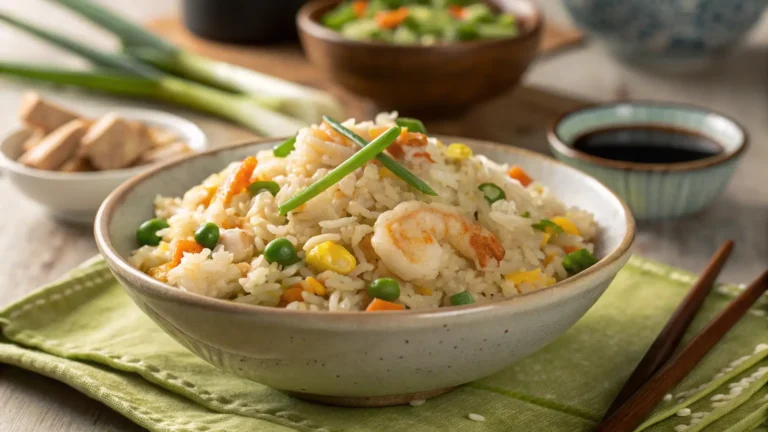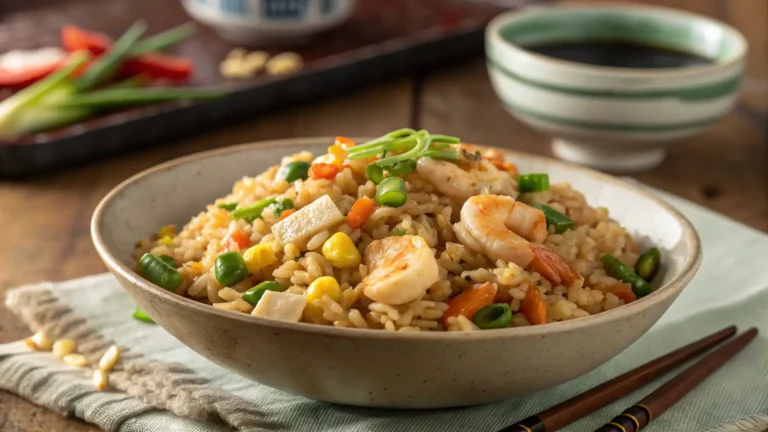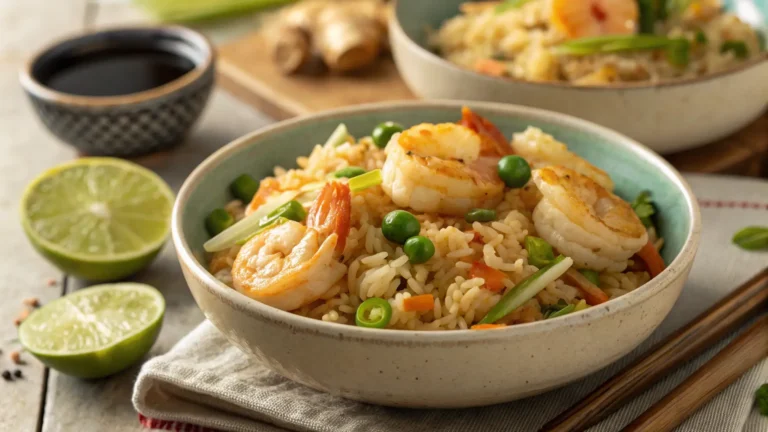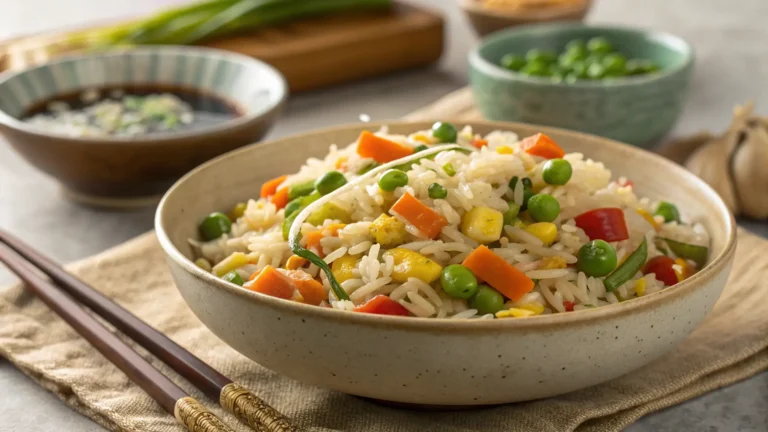
Restaurant Style Fried Rice – Easy, Flavorful & Better Than Takeout
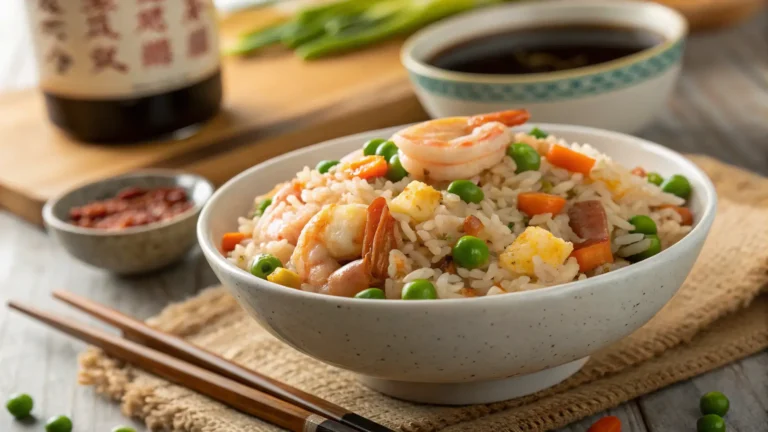
There’s something magical about restaurant style fried rice that keeps us ordering it time and time again. That perfect combination of fluffy grains, savory sauce, and tender vegetables tossed together in a sizzling wok creates an irresistible dish that’s surprisingly easy to recreate at home. This restaurant style fried rice recipe delivers all the flavors you crave from your favorite Chinese restaurant, with grains that are perfectly separated, not mushy, and coated in a delicious umami-rich sauce. Whether you’re looking to use up leftover rice or craving authentic takeout flavors without leaving your kitchen, this homemade version will become your go-to weeknight dinner solution.
Why You’ll Love This Recipe
- Ready in 15 minutes – Faster than delivery and uses simple pantry ingredients you likely already have
- Incredibly versatile – Easily customize with your favorite proteins, vegetables, or whatever needs using up in your fridge
- Budget-friendly meal – Transforms leftover rice into a satisfying main dish that feeds the whole family
- Authentic restaurant flavor – The secret techniques used by professional chefs create that signature “wok hei” (breath of the wok) taste
- Meal prep champion – Makes excellent leftovers and can be doubled or tripled for weekly meal planning
Ingredients
For the Rice Base:
- 4 cups cooked white rice, day-old and chilled (jasmine or long-grain work best)
- 3 tablespoons vegetable oil or peanut oil, divided
- 2 large eggs, lightly beaten
- 1 small onion, finely diced
- 2 cloves garlic, minced
- 1 cup frozen mixed vegetables (peas, carrots, corn)
For the Sauce:
- 3 tablespoons soy sauce (or tamari for gluten-free)
- 1 tablespoon oyster sauce
- 1 teaspoon sesame oil
- ½ teaspoon white pepper
- ¼ teaspoon MSG (optional, but authentic)
Protein Options (choose one or combine):
- 1 cup cooked chicken, diced
- 1 cup cooked shrimp, peeled and deveined
- 1 cup cooked pork, diced
- ½ cup ham, diced
For Garnish:
- 2 green onions, sliced
- 1 teaspoon sesame seeds (optional)
Substitution Notes: Use brown rice for a healthier option, coconut aminos instead of soy sauce for a soy-free version, or any combination of fresh vegetables like bell peppers, broccoli, or snap peas.
How to Make Restaurant Style Fried Rice
Step 1: Prepare Your Ingredients This is crucial for restaurant-quality results. Have all ingredients prepped, measured, and within arm’s reach before you start cooking. Break up any clumps in your cold rice with your hands—this ensures each grain cooks separately and doesn’t turn mushy.
Step 2: Scramble the Eggs Heat your wok or large skillet over high heat until it’s smoking hot. Add 1 tablespoon of oil, swirl to coat, then pour in the beaten eggs. Let them sit for 10 seconds, then scramble into small, fluffy pieces. Remove from the wok and set aside.
Step 3: Stir-Fry the Aromatics Add another tablespoon of oil to the hot wok. Toss in the diced onion and stir-fry for 1-2 minutes until softened. Add the minced garlic and cook for 30 seconds until fragrant, being careful not to burn it.
Step 4: Add Vegetables and Protein If using frozen vegetables, add them now and stir-fry for 2 minutes until heated through and any excess moisture evaporates. Add your chosen cooked protein and toss everything together for another minute.
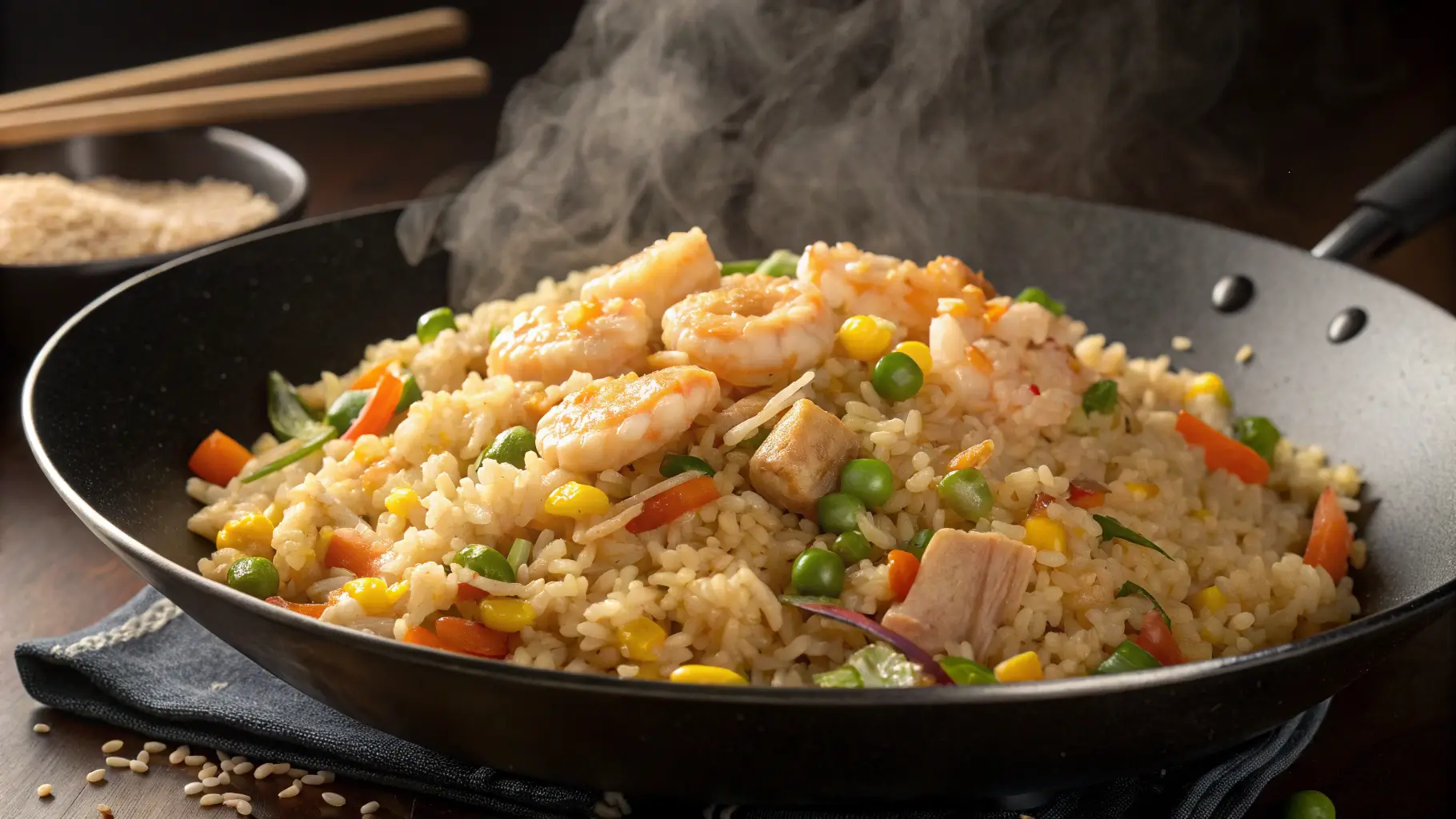
Step 5: Cook the Rice Add the final tablespoon of oil around the edges of the wok. Add the cold rice, breaking up any remaining clumps. Press the rice against the hot wok surface and let it sit for 30 seconds before tossing—this creates those desirable crispy bits. Continue stir-frying for 3-4 minutes, ensuring the rice is heated through and starting to develop a slightly golden color.
Step 6: Season and Combine Pour the soy sauce, oyster sauce, and sesame oil evenly over the rice. Toss vigorously to coat every grain. The rice should turn a beautiful golden-brown color. Add the white pepper and MSG if using. Return the scrambled eggs to the wok and fold them into the rice.
Step 7: Final Touch Taste and adjust seasoning with more soy sauce if needed. Remove from heat, stir in the sliced green onions, and sprinkle with sesame seeds if desired.
Recipe Tips & Variations
The Day-Old Rice Secret: The number one trick for restaurant style fried rice is using day-old rice that’s been refrigerated. Fresh rice contains too much moisture and will turn sticky and clumpy. The cold rice dries out slightly, allowing each grain to fry separately and absorb the seasonings perfectly.
Get Your Wok Hot: Professional chefs cook fried rice at extremely high temperatures. This creates “wok hei”—that distinctive smoky, slightly charred flavor. If you don’t have a wok, use the largest skillet you own and work in batches if necessary to avoid overcrowding.
Flavor Variations:
- Kimchi Fried Rice: Add ½ cup chopped kimchi and replace oyster sauce with gochujang
- Pineapple Fried Rice: Include ½ cup fresh pineapple chunks and a dash of curry powder
- Thai Basil Fried Rice: Add fresh Thai basil leaves and a squeeze of lime juice
- Bacon & Egg Fried Rice: Use crispy bacon instead of other proteins for an American-Chinese fusion
Dietary Swaps:
- Low-sodium: Use low-sodium soy sauce and reduce the amount by half
- Vegetarian: Skip meat proteins and add tofu, mushrooms, or edamame
- Cauliflower rice: Substitute riced cauliflower for a low-carb version (reduce cooking time significantly)
Serving Suggestions
Restaurant style fried rice shines as a complete meal on its own, but it also makes an excellent side dish. Serve it alongside:
- Crispy orange chicken or General Tso’s chicken
- Sweet and sour pork or beef and broccoli
- Spring rolls or egg rolls as appetizers
- Hot and sour soup or egg drop soup
- Steamed dumplings or potstickers
For a beautiful presentation, pack the fried rice into a small bowl, then invert it onto a plate to create a dome shape. Garnish with extra green onions and serve with chili oil or sriracha on the side for those who like extra heat.
Storage & Freezing Instructions
Refrigerator: Store leftover fried rice in an airtight container for up to 4 days. The flavors actually deepen overnight, making leftovers especially delicious.
Freezing: This recipe freezes beautifully for up to 3 months. Portion into individual freezer-safe containers for easy grab-and-go lunches. Let cool completely before freezing to prevent ice crystals.
Reheating: For best results, reheat in a skillet or wok over medium-high heat with a splash of water or oil to restore moisture and prevent drying. You can also microwave on high for 2-3 minutes, stirring halfway through. Add a sprinkle of water if the rice seems dry.
Nutrition Information
Per Serving (approximately 1.5 cups):
- Calories: 320
- Protein: 12g
- Carbohydrates: 45g
- Fat: 10g
- Fiber: 2g
- Sodium: 680mg
Note: Nutrition varies based on protein choices and optional ingredients
Conclusion
Now that you know the secrets to making authentic restaurant style fried rice at home, you’ll never need to order takeout again! This versatile recipe is perfect for using up leftovers, feeding a crowd, or enjoying a quick weeknight dinner that tastes like it came from your favorite Chinese restaurant. The beauty of fried rice is that once you master the basic technique, you can customize it endlessly to suit your taste preferences and dietary needs.
Give this recipe a try and let me know how it turns out! I’d love to hear about your favorite protein and vegetable combinations. Don’t forget to leave a comment below and share your results—your feedback helps other home cooks discover this amazing recipe.
Frequently Asked Questions (FAQs)
Can I use freshly cooked rice instead of day-old rice?
While day-old rice is ideal for restaurant style fried rice, you can use fresh rice in a pinch. Spread freshly cooked rice on a baking sheet and refrigerate uncovered for 30-60 minutes to remove excess moisture. You can also cook rice with slightly less water than usual to achieve drier grains that won’t clump together during frying.
What type of rice works best for fried rice?
Long-grain white rice, particularly jasmine rice, produces the best results for restaurant style fried rice. These varieties have less starch than short-grain rice, which helps the grains stay separate and fluffy. Basmati rice also works well. Avoid sticky rice or sushi rice, as they’re too glutinous for proper fried rice texture.
Why does my fried rice turn out mushy or sticky?
The most common culprits are using fresh rice with too much moisture, overcrowding the pan, or cooking at too low a temperature. Always use cold, day-old rice, cook in batches if necessary, and maintain high heat throughout the cooking process. Don’t add too much sauce at once—start with less and add more as needed.
Can I make restaurant style fried rice without a wok?
Absolutely! While a wok is traditional and allows for better heat distribution, a large, heavy-bottomed skillet or cast-iron pan works perfectly well. The key is using high heat and working quickly. A 12-inch or larger skillet gives you enough surface area to properly stir-fry without steaming the rice.
How can I add more vegetables without making the rice soggy?
The trick is ensuring vegetables are dry before adding them. If using fresh vegetables, pat them completely dry. With frozen vegetables, cook them briefly first to evaporate excess moisture before adding the rice. Heartier vegetables like carrots and broccoli should be pre-cooked or blanched since they won’t soften enough during the quick stir-fry process.
What’s the secret to getting that authentic restaurant flavor?
The distinctive taste of restaurant style fried rice comes from several factors: high heat creating “wok hei” (the slightly smoky, charred flavor), using day-old rice, the right balance of soy sauce and oyster sauce, and surprisingly, a small amount of MSG. Sesame oil added at the end provides aromatic depth, while cooking the eggs separately ensures they stay fluffy rather than disappearing into the rice.